Mixing Matters: The Key Process Behind Every Great Product
Mixing is probably the single most common processing step across almost all manufacturing industries. The related term blending is often used interchangeably, though it usually applies to the mixing of solids such as powders.
At Innovating Sciences we focus especially on Food, Beverage, Personal Care, Cosmetic and Pharmaceutical industries but mixing principles are used in many other diverse fields. These include Agriculture (e.g., livestock feeds, compound fertilizers), Chemical Engineering, Construction (e.g., mixing of concrete), Detergents, Paints, Coatings and Energy (e.g., oil and
gas refining).
Mixing for Uniformity
In these varied industries, mixing may be sub-divided into solids mixing (e.g., powders, particles), semi-solids mixing (e.g., creams, lotions, pastes, slurries) and fluid (liquid or gas) mixing. In most cases, the primary goal of mixing is to obtain a uniform blend of the components. A good example is a pharmaceutical product, where each tablet needs to contain a specific amount of active ingredient so that a patient receives the same dose each time they take a certain medicine. Insufficient mixing would lead to either under-dosing or over-dosing, hence content uniformity is a major requirement for pharmaceutical products.
Beyond Uniformity: Other Reasons We Mix
In some cases, mixing may be carried out to help ingredients dissolve or undergo dissolution (think sugar dissolving as you mix it into your morning cup of coffee). Adequate mixing (the type of spoon used and how fast you stir) ensures that the sugar dissolves in a few seconds instead of minutes.
Mixing is also used to speed up the rate of heat transfer (e.g., heating or cooling). Controlled temperature is an important step in the manufacturing of many products, for example heating to increase reaction rates or to facilitate mixing by reducing viscosity. Cooling would apply in cases such as limiting the degradation of heat sensitive ingredients. An example would be the addition of fragrances to a cosmetic cream after it has been cooled to minimize loss due to evaporation.
Mixing is critical in chemical and biotech reactions (e.g., synthesis, fermentation). Many products used in our daily lives are prepared by a series of reactions (e.g., polymers) or fermentation processes (e.g., antibiotics, vaccines). During manufacturing, mixing ensures that reactions run faster and are hence more cost effective.
Navigating the Challenges
Not all materials mix easily. Two examples are:
- Low dose additives (e.g. vitamin and mineral pre-mixes added to human nutrition formulas or livestock feeds in very small amounts)
- Viscous liquids (e.g. honey, creams and ointments)
In such cases, specialized techniques and procedures are needed.
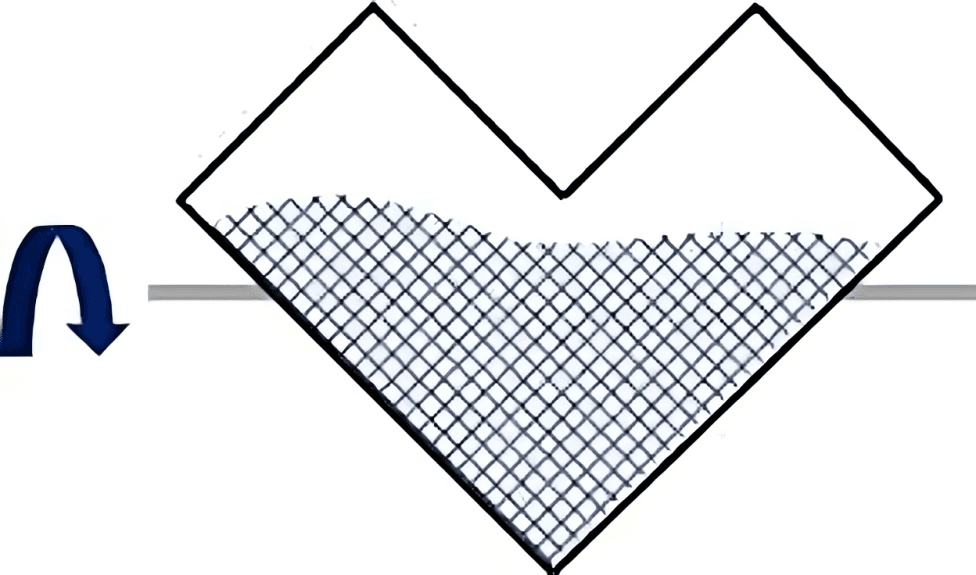
Mixing equipment plays a critical role in all these fields and the type of equipment selected as well as the mixing conditions (e.g., fill volume, mixing elements, mixing speeds and time) must be optimized for individual products. Mixers and blenders vary considerably in general design, mixing mechanisms and applicability. An example of a blender commonly used for mixing powders is shown in the diagram below.
Partner with Innovating Sciences
Even well-designed mixing operations can present unexpected challenges. That’s where we come in. At Innovating Sciences, we help clients troubleshoot and optimize their processes through customized solutions and expert guidance.
Ready to improve your mixing performance?
Reach out today — let’s tackle your next mixing challenge together.